

Grid Audits & Diagnostics

Electrical Audits: An Overview
Electrical grid audits and diagnostics ensure safety, efficiency, and reliability through detailed inspections, testing, and data analysis.
Key components include visual inspections for corrosion or damage, thermography for hotspots, and ground grid resistance testing. Modern diagnostics use AI/IoT for predictive maintenance to prevent outages and identify faults
What Specific Electrical Hazards Can Be Identified During an Electrical Audit?
During an electrical safety audit, several specific hazards can be identified that pose significant risks to both personnel and property. These include:
- Faulty Wiring: It is a prevalent hazard uncovered during audits. Issues such as damaged insulation, loose connections, and improper wire sizing can lead to short circuits, electrical fires, and equipment malfunctions.
- Inadequate Grounding: Electrical audits often reveal inadequate grounding systems, missing ground connections, or improper grounding practices. These deficiencies can result in electrical shock hazards and equipment damage.
- Overloaded Circuits: Overloading occurs when circuits carry more current than they are designed for, leading to overheating and potential fire hazards. This is often due to the addition of new equipment without proper circuit upgrades or excessive use of extension cords.
- Outdated Equipment: Electrical safety analysis frequently identifies outdated electrical equipment that no longer meets current safety standards. Components like old circuit breakers, fuses, and switches may be prone to failure, compromising system reliability and increasing the risk of accidents.
- Non-Compliance with Safety Standards: This is a significant hazard and includes improper installation practices, failure to adhere to electrical codes, and the use of non-compliant equipment.
- Exposed Electrical Parts: Exposed electrical components, such as live wires or uncovered junction boxes, pose a direct threat of electric shock or electrocution. These hazards are often overlooked but require immediate attention, with all electrical parts being properly enclosed and secured.
- Poor Maintenance: Neglecting regular maintenance of electrical systems can lead to the deterioration of components, increased wear and tear, and a higher likelihood of failures. Electrical assessments often reveal equipment that is not well-maintained, which can lead to breakdowns, malfunctions, and potential hazards.
Key points of this service
Key Components of Electrical Audits
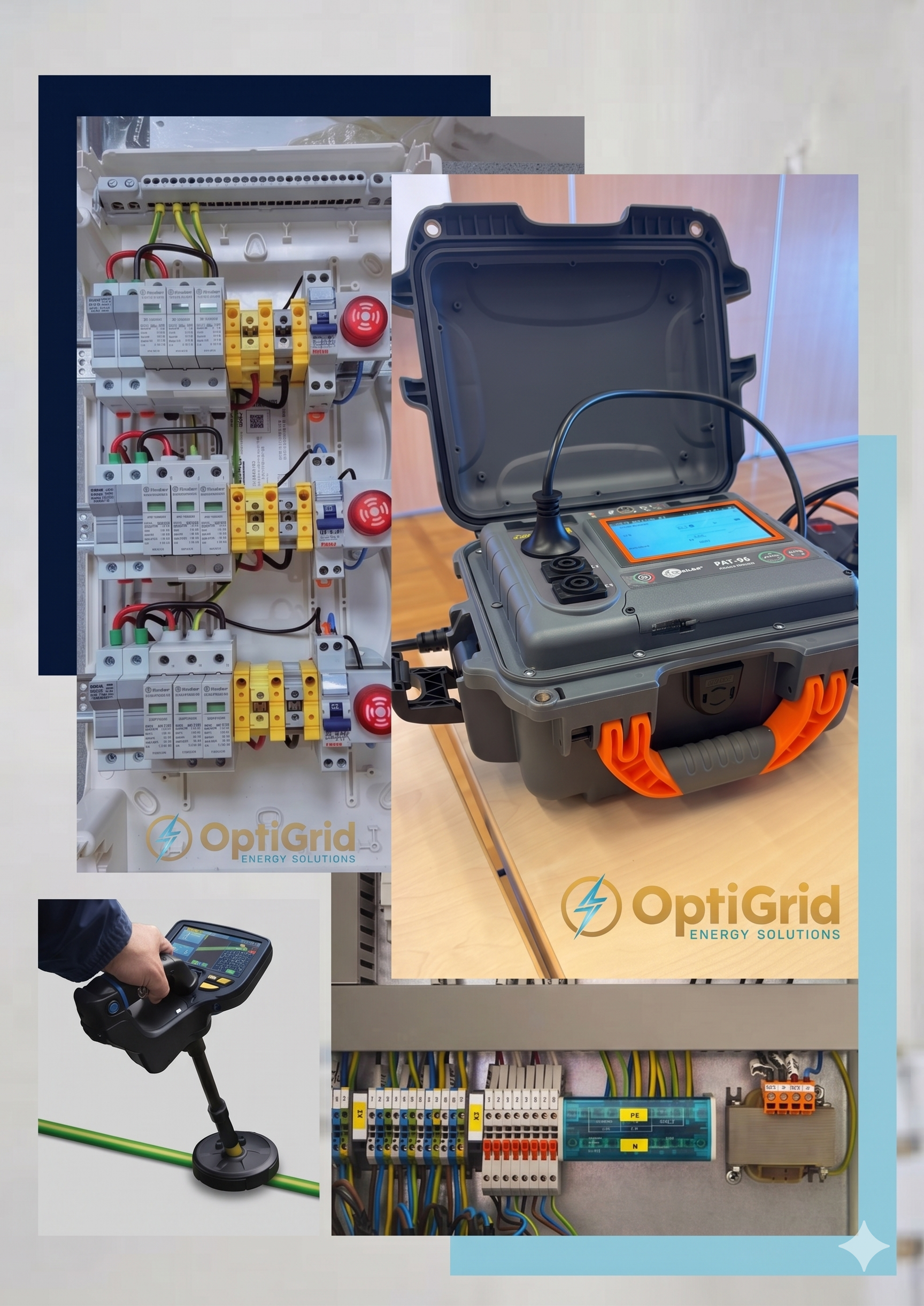
- Physical Inspections: Detailed checks of transformers, switchboards, and conductors for deterioration.
- Thermal Scanning: Using infrared cameras to detect overheated connections and components, indicating potential fire risks.
- Ground Grid Testing: Measuring the, resistance of the ground grid to confirm it provides a safe, low-resistance path for fault current.
- Compliance & Safety Standards: Audits ensure compliance with standards like NFPA 70E and OSHA 1910.303
Diagnostics & Testing Methods
- Power System Diagnostics: Involves short-circuit studies and arc flash assessments to evaluate risks.
- Insulation & Continuity: Testing insulation resistance and verifying circuit integrity.
- Advanced Diagnostics: Utilizing Artificial Intelligence (AI) and Machine Learning (ML) for real-time monitoring and predicting equipment failure.
- Fault Analysis: Techniques include time-domain tests (phase jump) and frequency-domain tests (impedance scanning) to evaluate grid strength
Audit Process and Frequency
- Frequency: According to NFPA 70B, electrical equipment should be inspected at least every 12 months, or more frequently for critical equipment.
- Reporting: A formal report detailing findings, risk levels, and corrective actions is crucial for compliance
Core Benefits
- Prevents Blackouts: Catches equipment failures before they cause widespread power outages.
- Enhances Safety: Lowers fire risks and prevents dangerous arc flash incidents for workers.
- Cuts Expenses: Reduces emergency repair costs through cheaper, planned maintenance.
- Extends Lifespan: Prolongs the operational life of expensive transformers and switchgear.
- Improves Efficiency: Lowers energy losses across transmission lines and substations.
- Ensures Compliance: Keeps operations in line with strict insurance and government regulations.
- Optimizes Power Quality: Fixes voltage drops and harmonics that damage sensitive electronics.